How to Choose Double Glass Solar Panels for Your Project
Choosing Double Glass Solar Panels is not simply a matter of selecting the strongest-looking module. A project’s climate, roof or ground structure, mounting system, and energy goals all affect whether glass-glass construction is a good fit. The market is expanding quickly: IRENA’s Renewable Capacity Statistics 2024 records 346 GW of new solar capacity added worldwide in 2023. That scale makes careful equipment selection more important, not less.
Double-glass modules use glass on both sides, replacing the conventional polymer backsheet. Many are designed for bifacial generation, but extra rear-side output depends on reflected light, row spacing, surface conditions, and system design. A bright gravel surface may help; a shaded or dark surface may not. There is no universal winner. The glass can offer a robust barrier against moisture, yet module weight, handling requirements, and mounting compatibility deserve equal attention. Small details matter.
A sound comparison should examine power rating, temperature coefficient, bifaciality, glass thickness, mechanical-load data, and product and performance warranties. Check that the proposed module has relevant IEC test documentation and that its dimensions and weight suit the project structure. Fraunhofer ISE’s Photovoltaics Report tracks the continuing shift toward high-efficiency and bifacial technologies, but market trends alone cannot predict a site’s yield. That sounds straightforward. It isn’t. Even strong specifications can disappoint when installation quality, shading, or the rear-side environment is overlooked. The best choice is the module whose verified performance, durability evidence, and practical constraints match the project—not simply the one with the highest headline wattage.
Understand Double-Glass Solar Panel Design and Performance
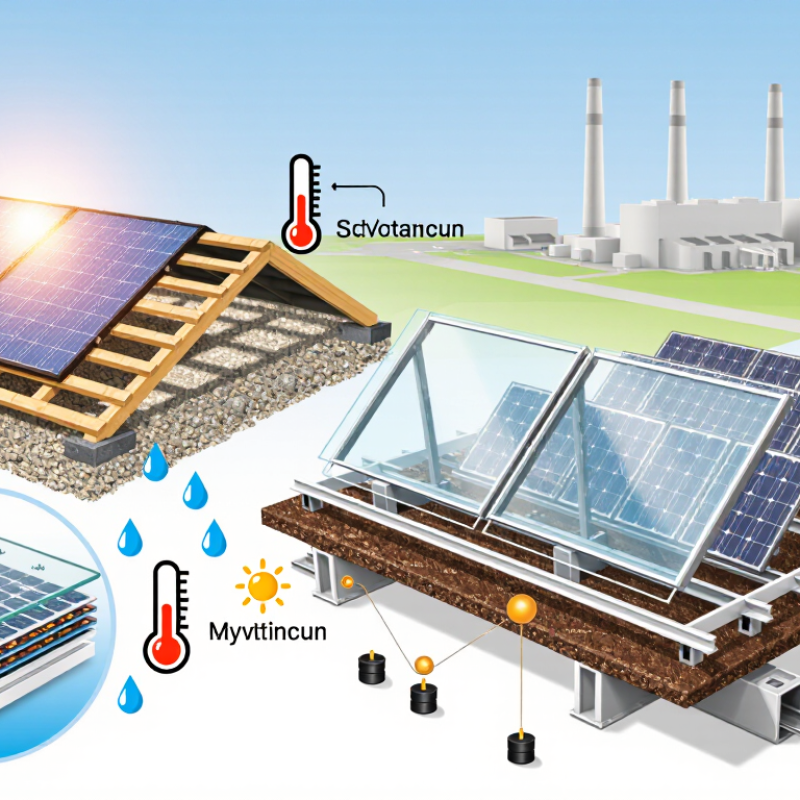
Double-glass solar panels place solar cells between two layers of glass, rather than pairing front glass with a polymer backsheet. This construction can improve resistance to moisture and reduce exposure to harsh weather. The rear glass also protects the module, but adds weight. Check roof capacity and handling requirements before specifying it.
Some designs use bifacial cells, which can collect light from both sides. Their rear-side output depends on reflected light from the ground or roof, so real gains vary with surface color, spacing, and mounting height. A pale, reflective roof may help; a dark roof often contributes less. Measure site conditions instead of relying on a headline efficiency figure.
Glass thickness, edge sealing, cell layout, and frame design all affect durability and performance. Review independent test data, product warranties, and temperature coefficients, then compare them with your project’s climate and electrical design. Heavier modules can complicate rooftop installation, especially around narrow access points. That detail matters. Glass-to-glass construction is not automatically the best choice for every site, and I would reassess it if lifting limits or roof loads are tight. Ask the installer how the module will be secured and how drainage, wiring, and maintenance access will work in practice.
Define Project Requirements and Site Conditions
Before comparing double-glass solar panels, define what the project must deliver. Estimate annual electricity use, available installation area, and the portion of demand you want solar to cover. Record roof dimensions, tilt, orientation, and shading at different times of day. A chimney shadow at noon can matter more than a tree’s morning shade. Measure twice.
Check the site’s physical limits. Double-glass panels can be heavier than some alternatives, so confirm the roof structure and mounting system can support the planned array. Ask a qualified installer or structural professional to assess this, especially on older roofs. Also document local wind, snow, heat, and coastal exposure. These conditions affect mounting choices and long-term performance; a quick visual inspection is not enough.
Think about maintenance and access before settling on a layout. Note roof walkways, drainage paths, nearby vegetation, and where wiring can safely run. If the array may receive light from both sides, check whether the ground or roof surface can reflect useful light; do not assume bifacial gains without site-specific analysis. Compare panel dimensions with the usable roof area, not its total area. I have seen plans look neat on paper, then lose capacity to vents and setbacks. That detail is easy to underestimate.
How to Choose Double-Glass Solar Panels: Define Project Requirements and Site Conditions
Representative surface albedo for early site screening
Albedo is the fraction of sunlight a surface reflects. Higher-reflectance surfaces can support greater rear-side output from bifacial-capable double-glass modules. These values are representative planning assumptions, not site measurements; actual reflectance and energy gain depend on surface condition, module height, shading, and system layout. Confirm site conditions and compare project-specific energy estimates before selecting modules.
Compare Efficiency, Power, and Electrical Specifications
Double-glass construction describes a module’s build, not its efficiency. Compare efficiency and rated power under the same test conditions. A higher-wattage panel may simply be larger, so check watts per square metre when roof space is limited. Small differences matter. Bifacial models can collect light from the rear, but the gain depends on mounting height, ground colour, and shading. A panel close to a dark roof may add little. Estimate output using the project’s actual layout, not an advertised best-case figure.
Electrical specifications determine whether the panel fits the system. Check open-circuit voltage (Voc) against the inverter’s maximum input, including the voltage rise on cold mornings. Compare short-circuit current (Isc) with each input’s current limit, and match operating voltage and current to the inverter’s MPPT range. Check the temperature coefficient, too; output falls as modules heat up. Double-glass panels can weigh more, so confirm the roof or mounting structure can support them. Datasheets can still leave gaps. Ask how power tolerances and any bifacial gain were measured, and compare those assumptions with the site’s conditions.
How to Choose Double Glass Solar Panels for Your Project — Compare Efficiency, Power, and Electrical Specifications
Representative double-glass module configurations for comparing project requirements. Values are illustrative design examples, not specifications for a particular product.
| Representative Configuration | Rated Power (W) | Module Efficiency | Approx. Dimensions (mm) | Approx. Weight (kg) | Vmp (V) | Imp (A) | Voc (V) | Isc (A) | Typical Pmax Temperature Coefficient | Potential Project Fit |
| Compact format | 400 | 20.5% | 1,722 × 1,134 | Approx. 22 | 31.0 | 12.90 | 37.2 | 13.70 | About −0.35%/°C | Smaller roofs or sites where module handling and layout flexibility are priorities. |
| Standard format | 450 | 20.9% | 1,903 × 1,134 | Approx. 24 | 34.6 | 13.01 | 41.4 | 13.80 | About −0.34%/°C | A balanced option for many residential and commercial layouts. |
| High-output format | 500 | 21.1% | 2,094 × 1,134 | Approx. 27 | 38.2 | 13.09 | 45.6 | 13.85 | About −0.32%/°C | Projects seeking higher output per module while keeping a common module width. |
| Large-format | 550 | 21.3% | 2,278 × 1,134 | Approx. 30 | 41.8 | 13.16 | 49.8 | 13.95 | About −0.31%/°C | Utility or large commercial sites with suitable transport, mounting, and handling capacity. |
| Extra-high-output format | 600 | 22.2% | 2,382 × 1,134 | Approx. 32 | 45.4 | 13.22 | 54.0 | 14.00 | About −0.29%/°C | Projects prioritizing high power per module, subject to site and equipment compatibility. |
Selection notes: Electrical figures are representative STC values (irradiance 1,000 W/m², cell temperature 25°C, and air mass 1.5); actual specifications vary by module design. Check the current datasheet for voltage and current limits, maximum system voltage, connector compatibility, mechanical loads, dimensions, and weight. Confirm that cold-weather open-circuit voltage stays within the inverter’s maximum input voltage and that operating current is compatible with the inverter or charge controller. Double-glass construction does not by itself guarantee rear-side generation; bifacial output depends on the cell design, mounting height, ground reflectance, shading, and installation layout.
Assess Durability, Installation, and System Compatibility
Double-glass solar panels enclose their cells between two layers of glass, which can help resist moisture and mechanical stress. Still, glass construction does not make every panel equally durable. Check the stated load ratings, frame design, and warranty conditions against your site’s wind, snow, and temperature range. If possible, inspect the edge seals and mounting points; small flaws there can matter over time. A heavier panel may also require stronger rails and more careful handling.
Tips: Measure the roof or ground-mount area before ordering. Leave room for access, drainage, and wiring. Check the panel dimensions, weight, and clamp zones against the mounting system’s instructions. A few centimeters can change the layout.
Confirm electrical compatibility before installation. Compare the panel’s open-circuit voltage and operating current with the inverter or charge controller limits, accounting for cold-weather voltage increases. Ask a qualified installer to review string design, cable routing, grounding, and roof attachment details. Double-glass panels can be less forgiving to lift or clamp incorrectly, so follow the manufacturer’s handling guidance. I have seen careful plans miss one awkward cable route. Recheck it on site.
Evaluate Supplier Quality, Warranties, and Lifecycle Value
When comparing double glass solar panels, inspect more than the datasheet. Request IEC 61215 and IEC 61730 certification, independent test reports, and production quality records. Check glass thickness, edge sealing, junction-box attachment, and packaging; cracked corners can start as a shipping problem. Ask whether factory testing is traceable to each panel’s serial number. Small details matter.
Warranties need close reading. Separate the product warranty from the power-performance warranty, then check coverage for delamination, moisture ingress, and repair labor. Confirm who handles claims and whether the supplier can support projects over time. A long warranty is not automatically strong. Exclusions and claim procedures matter. NREL’s review of roughly 2,000 photovoltaic degradation rates found a median rate near 0.5% per year (Jordan and Kurtz, “Photovoltaic Degradation Rates—An Analytical Review,” 2013). That is useful context, not a guarantee for a specific double glass module.
Compare lifecycle value using expected energy output, degradation assumptions, cleaning needs, transport damage, and replacement costs. Model your site’s wind, snow, humidity, and mounting conditions rather than relying on a generic yield estimate. Request test evidence for mechanical loads and damp heat, and verify that the tested construction matches the panels being quoted. Supplier answers can be incomplete; record assumptions and ask for clarification before signing.