Why Is Pharma Equipment Essential for Global Buyers?
Global medicine demand is rising, while manufacturers face tighter quality expectations. The IQVIA Institute’s Global Use of Medicines 2024 report projects worldwide medicine spending near $2.3 trillion by 2028. That growth requires dependable production capacity, not merely larger factories.
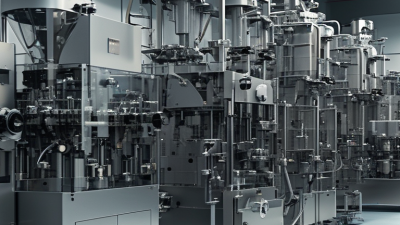
Pharma equipment supports consistent filling, mixing, sterilisation, containment, and inspection. Stainless-steel vessels must resist corrosion. Sensors must record temperature and pressure accurately. Clean-in-place systems must reach difficult pipework without leaving residues. These details matter when products cross borders and serve patients with different healthcare needs.
The WHO Global Vaccine Market Report 2023 also highlights supply concentration and the need for stronger manufacturing resilience. Buyers therefore examine equipment suppliers more carefully. They review validation records, service coverage, spare-part access, cybersecurity, and operator training. A low purchase price can become expensive when a replacement seal delays production for weeks.
Dr. Janet Woodcock, a leading pharmaceutical quality expert and former FDA CDER director, has emphasized, “Quality cannot be tested into products; it should be built-in by design.” That principle explains pharma equipment’s strategic value. Well-designed systems support process control before final testing begins.
Still, equipment is not a complete solution. Weak procedures can undermine advanced machinery. Poor maintenance can defeat excellent engineering. That is easy to forget.
Global buyers need evidence, not impressive brochures. They should compare performance data, qualification support, and lifecycle costs. The best equipment may not be the most automated option. It is the one that performs reliably, remains serviceable, and protects product quality over time.

Pharma equipment covers far more than tablet presses. It includes weighing systems, mixers, granulators, fluid-bed dryers, filling machines, sterilizers, inspection units, and packaging lines. Utilities matter too. Purified water, clean steam, compressed air, and controlled HVAC protect product quality. In 2023, the IQVIA Institute reported global medicine spending of about 1.7 trillion US dollars. It projects roughly 2.3 trillion dollars by 2028. That growth increases pressure on buyers to select equipment that can scale without losing control.
Good equipment supports repeatable drug manufacturing. Sensors record temperature, pressure, weight, and humidity during critical steps. Automated cleaning systems reduce residue between batches. Vision inspection can identify damaged tablets or incorrect labels before release. The WHO reports that one in ten medical products in low- and middle-income countries may be substandard or falsified. Equipment cannot solve every quality problem. Weak procedures and poor operator training still create risks. This is where many projects become less perfect than planned. Buyers should examine validation records, calibration routines, spare-part access, and data integrity controls. FDA process-validation guidance also stresses a lifecycle approach, from process design through continued verification.
Tips: Map each machine to a specific process risk. Ask for measurable performance data, not attractive brochures. Check whether operators can clean, inspect, and maintain the system safely. Leave room for mistakes during commissioning. A line that works only under ideal conditions is not truly reliable. ICH Q9(R1) also encourages risk-based decisions, so purchasing teams should compare downtime, contamination risk, training needs, and long-term support—not only the initial price.
Why Is Pharma Equipment Essential for Global Buyers?
Equipment quality directly affects product safety and regulatory compliance. A poorly finished vessel can trap residue around welds. A drifting temperature sensor can weaken a sensitive formulation. Small defects become serious during cleaning, sterilization, or batch release.
The FDA’s Drug Shortages Task Force reported that 62% of shortages from 2013 to 2017 involved quality problems. Equipment failure is not the only cause. Still, weak maintenance and unreliable process controls can increase manufacturing risk. The WHO estimates that one in ten medical products in low- and middle-income countries is substandard or falsified. This figure does not prove equipment caused those products. It does show why controlled production matters.
Tips: Ask for material certificates, surface-finish records, calibration data, and cleaning-validation support. Review weld quality under bright inspection light. Confirm alarm functions during factory and site acceptance tests. Check whether software creates secure, traceable records. Regulatory expectations are not just paperwork. They reach the drain design, gasket choice, sensor location, and operator interface. Some buyers focus too heavily on purchase price. That is understandable, but it can become an expensive mistake. A polished machine is not automatically a compliant machine. Manufacturers and buyers should document every critical decision, including the uncomfortable uncertainties.
| Quality and Compliance Dimension | Relevant Requirement or Verified Fact | Practical Equipment Criteria | Impact on Product Safety | Evidence Global Buyers Should Request | Authoritative Reference |
|---|---|---|---|---|---|
| Good Manufacturing Practice (GMP) | Manufacturing equipment must be suitable for its intended use and designed, located, and maintained to prevent contamination and mix-ups. | Documented equipment specifications, controlled installation, preventive maintenance, and defined operating limits. | Reduces the risk of foreign matter, cross-contamination, incorrect processing, and inconsistent product quality. | Approved user requirement specification, design qualification, installation qualification, operating qualification, maintenance records, and change-control history. |
21 CFR Part 211 EU GMP Volume 4 |
| Product-Contact Materials | Equipment construction materials must not react with, add to, or absorb drug products in a way that could affect product identity, strength, quality, or purity. | Appropriate stainless-steel or polymer grades, material compatibility assessment, corrosion resistance, and traceable material certificates. | Helps prevent leachables, extractables, corrosion particles, and chemical interaction with the formulation. | Material certificates, material traceability records, compatibility studies, weld documentation, and supplier declarations. |
21 CFR 211.65 ASME BPE |
| Cleanability and Hygienic Design | Equipment should be designed so that cleaning and maintenance can be performed effectively and contamination can be prevented. | Drainable piping, minimized dead legs, smooth product-contact surfaces, accessible components, validated cleaning cycles, and suitable seals. | Limits residue accumulation and reduces microbial, chemical, and product-to-product contamination risks. | Hygienic design drawings, cleaning validation or verification reports, surface-finish records, drainability assessments, and gasket specifications. |
21 CFR 211.67 EU GMP Volume 4, Chapter 3 |
| Sterile Manufacturing | For sterile products, contamination-control measures must address microbial, particulate, and endotoxin or pyrogen risks across the process. | Validated sterilization or sanitization, controlled airflow where applicable, suitable barrier technology, sterile connections, and contamination monitoring. | Reduces the probability of microbial contamination and helps protect patients from unsafe sterile products. | Contamination Control Strategy, sterilization-cycle qualification, filter integrity tests, environmental-monitoring data, and media-fill results where applicable. | EU GMP Annex 1: Manufacture of Sterile Medicinal Products |
| Cleanroom Classification | ISO 14644-1 classifies air cleanliness by airborne particle concentration at specified particle sizes from 0.1 µm to 5 µm. | Equipment should be compatible with the required cleanroom grade and should not generate unacceptable particles during operation, cleaning, or maintenance. | Controls airborne particulate contamination that may affect sterile or highly sensitive products. | Cleanroom classification reports, particle-generation assessments, equipment qualification data, and environmental-monitoring trend reports. | ISO 14644-1:2015 |
| Measurement and Calibration | Critical measuring, weighing, monitoring, and test equipment must be calibrated or checked at defined intervals using traceable standards. | Calibrated sensors, documented accuracy and tolerance limits, alarm verification, secure data records, and traceable reference standards. | Prevents incorrect temperature, pressure, flow, weight, time, or other process conditions from compromising the batch. | Calibration certificates, uncertainty information, calibration schedules, out-of-tolerance investigations, and instrument history files. |
21 CFR 211.68 21 CFR 211.160 |
| Electronic Records and Data Integrity | Electronic records and electronic signatures used in regulated activities may be subject to controls for authenticity, reliability, audit trails, access, and record retention. | Unique user access, role-based permissions, secure audit trails, validated software, backup controls, and controlled system changes. | Supports trustworthy batch records and reduces the risk of unauthorized changes, data loss, or undocumented processing. | Software validation package, system access matrix, audit-trail review procedure, backup and restore test, cybersecurity controls, and data-retention policy. | 21 CFR Part 11 |
| Qualification and Validation | Equipment used in pharmaceutical manufacturing should be qualified to demonstrate that it is installed correctly, operates as intended, and performs consistently. | Risk-based qualification plan covering design, installation, operation, and performance; predefined acceptance criteria; controlled deviations. | Provides documented evidence that the equipment can repeatedly support a controlled and reproducible process. | User requirement specification, risk assessment, qualification protocols and reports, deviation records, acceptance criteria, and requalification plan. | EU GMP Annex 15: Qualification and Validation |
| Pressure and Mechanical Safety | Pressure vessels, piping, and associated systems require appropriate design, inspection, testing, and safe operating controls according to the applicable jurisdiction. | Rated pressure and temperature limits, relief protection, leak testing, weld inspection, fatigue assessment where relevant, and documented operating procedures. | Protects personnel, facilities, and products from rupture, leakage, uncontrolled release, and process interruption. | Pressure-vessel or piping design calculations, inspection reports, hydrostatic or pneumatic test records, relief-device certificates, and operating-limit labels. |
ASME BPVC Section VIII Applicable national pressure-equipment regulations |
| Supply-Chain and Lifecycle Reliability | Equipment quality includes dependable operation, spare-parts availability, maintainability, and documented changes throughout the equipment lifecycle. | Preventive-maintenance plan, critical-spares list, service procedures, obsolescence strategy, change notification, and defined response times. | Reduces unplanned downtime, batch loss, delayed release, and the risk of undocumented modifications affecting validated status. | Maintenance strategy, spare-parts register, service documentation, change-control procedure, obsolescence statement, and supplier quality agreement. |
EU GMP Volume 4, Chapter 1 21 CFR 211.67 |
Why Is Pharma Equipment Essential for Global Buyers?
Advanced pharma machinery turns repeatability into measurable output. Servo-driven filling systems control dose volume, while vision inspection detects misplaced seals and damaged containers. These details matter when production crosses borders. According to the IQVIA Institute’s Global Use of Medicines 2024 report, worldwide medicine spending may reach $1.9 trillion by 2028. Rising demand requires more than larger buildings. It requires stable cycle times, documented settings, and faster changeovers. Deloitte’s 2023 Smart Manufacturing and Operations Survey reports that 86% of manufacturing leaders expect smart manufacturing to drive competitiveness within five years. Connected equipment can record temperature, pressure, torque, and downtime. Operators can then find process drift before a full batch is affected.
Accuracy also protects capacity. In-process weighing, automated cleaning records, and electronic batch data reduce transcription errors and release delays. The FDA’s Process Validation guidance emphasizes controlled, reproducible processes across the equipment lifecycle. That principle is practical. A machine should perform consistently after installation, maintenance, and format changes. Automation is not magic. Poor calibration, weak training, or unsuitable product-contact materials can erase expected gains. An expensive system can become a bottleneck when operators cannot adjust it safely. Global buyers should examine validation evidence, spare-part access, data integrity, and service response times. Small gaps matter. Capacity is not only speed; it is usable output that remains accurate, compliant, and traceable.
Why Is Pharma Equipment Essential for Global Buyers?
Global buyers should evaluate equipment against the regulations governing their target markets. Good Manufacturing Practice requirements are a practical starting point, but they are not identical everywhere. Buyers should compare local rules with recognized frameworks, such as ISO quality standards, GAMP guidance, and electronic-record requirements. A certificate alone proves little. Ask who issued it, when it was tested, and which equipment configuration it covers.
Material and hygienic design deserve close attention. Product-contact surfaces should use suitable, traceable materials, often stainless steel with documented grades and surface finishes. Crevices, dead legs, rough welds, and hard-to-clean seals can create serious maintenance problems. Check cleanability studies, drainage performance, and compatibility with cleaning agents. Small details matter. They usually do.
Validation evidence should include design, installation, operation, and performance qualification records. Factory and site acceptance tests should use agreed protocols, measurable limits, and recorded deviations. Calibration certificates must remain current and traceable. For automated systems, review access controls, audit trails, backup procedures, and data-integrity safeguards. Cybersecurity is now part of equipment reliability, not an optional feature.
Utilities also require careful evaluation. Confirm electrical standards, compressed-air quality, water specifications, room classification, and emergency protections before shipment. Supplier training and spare-parts support can determine whether equipment performs reliably after installation. A checklist can still miss local expectations. That is uncomfortable, but realistic. Independent technical review may reveal gaps before they become expensive delays.
Key international standards and guidance to evaluate before purchasing pharmaceutical equipment
Pharmaceutical equipment should support product quality, patient safety, contamination control, measurement reliability, and documented qualification. Global buyers commonly review quality-management, medical-device, cleanroom, electrical-safety, lifecycle-validation, and GMP requirements together. The reference years shown identify the edition or amendment represented here; buyers should confirm the latest applicable version and local regulatory requirements before purchase.
References: ISO 9001:2015; ISO 13485:2016; ISO 14644-1:2015; IEC 61010-1:2010 with Amendment 1:2016; ASTM E2500-20; EU GMP Annex 1:2022.
Reliable pharma equipment does more than process materials. It helps global buyers protect supply continuity, product quality, and market access. In a validated facility, stable temperature control, accurate filling, and repeatable cleaning reduce avoidable variation. These details matter when shipments cross borders. A small calibration drift can delay a batch, trigger an investigation, or weaken customer confidence. That risk is practical, not theoretical.
Experienced buyers examine equipment performance before signing a purchase agreement. They review material certificates, calibration records, factory testing, and change-control procedures. Clear documentation supports qualification activities such as installation, operational, and performance checks. It also helps technical teams answer questions from regulators, auditors, and distribution partners. Remote diagnostics, spare-part planning, and operator training can reduce downtime when service access is limited. Reliable support matters as much as mechanical performance.
No system is perfect. That needs honest attention. Even strong equipment can fail through poor cleaning, rushed maintenance, or unclear operating instructions. Buyers should test critical alarms, inspect accessible surfaces, and confirm that data records remain accurate. Site conditions may also expose weaknesses that factory testing misses. A humid warehouse, unstable power supply, or limited technician coverage can change the risk profile. Practical supplier communication and documented corrective actions help close these gaps. Market access depends on evidence, not promises.