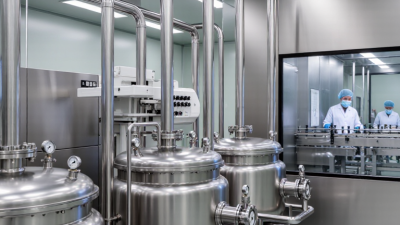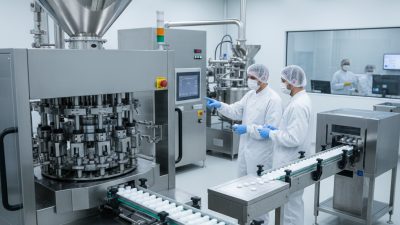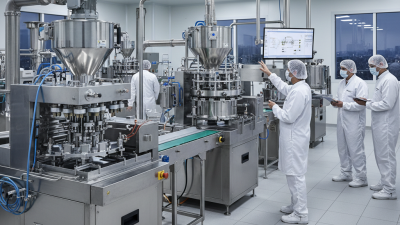
Choosing pharmaceutical processing equipment is a practical decision with long-term consequences. The right system must protect product quality, operator safety, cleaning efficiency, and production continuity. A stainless-steel surface may look perfect under bright factory lights, yet hidden dead legs can retain powder or liquid residues. Small design details matter.
James Agalloco, a respected pharmaceutical engineering consultant and author, has stated, “Validation is not a one-time event.” This principle should guide every equipment decision. Buyers must examine the complete lifecycle, from material selection and installation to cleaning, maintenance, calibration, and eventual replacement. A fast quotation is not enough. Neither is an impressive equipment brochure.
The selection process should begin with the product and its actual process conditions. Consider batch size, viscosity, temperature, shear sensitivity, containment needs, and cleaning methods. Check whether the equipment supports repeatable results and practical operator access. Ask how seals, valves, filters, and sensors perform after repeated use. A machine that works well during a factory demonstration may behave differently after months of production.
Experience also exposes uncomfortable gaps. Specifications can be incomplete. Supplier claims may sound confident but remain difficult to verify. Even experienced teams can overlook maintenance access or changeover time. Therefore, compare documented evidence, test critical functions, and involve quality, engineering, production, and maintenance personnel. Reliable pharmaceutical processing equipment should fit the process, the facility, and the people who operate it—not merely the purchasing budget.
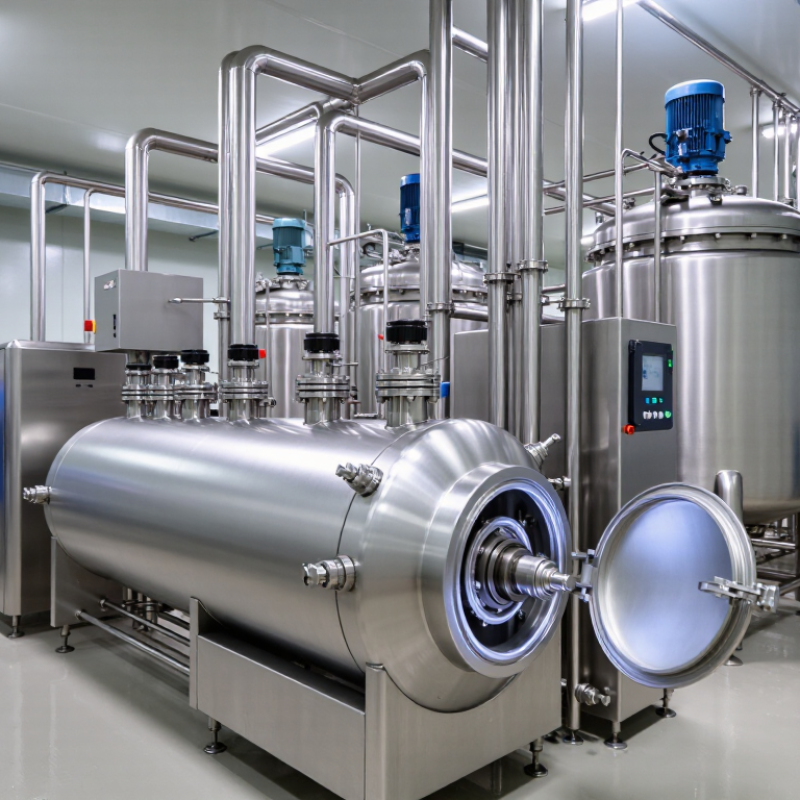
Choosing pharmaceutical processing equipment starts with the product, not the machine catalogue. Define viscosity, temperature sensitivity, shear tolerance, solids content, and batch volume. These details determine whether a vessel needs an agitator, jacket, homogenizer, or low-shear transfer system. In production trials, a small change in impeller speed can alter dispersion quality and cleaning time. I have seen equipment pass a factory test yet struggle with a thick formulation at full scale. Scale-up is rarely perfectly linear.
For product-contact surfaces, 316L stainless steel is a common GMP choice because it offers strong corrosion resistance and supports hygienic fabrication. Request documented material certificates, surface-finish records, orbital-weld inspection, and drainability evidence. A smooth-looking tank is not automatically cleanable. FDA’s Guidance for Industry on Sterile Drug Products Produced by Aseptic Processing emphasizes validated cleaning, sterilization, and contamination control rather than appearance alone. Dead legs, poor slopes, and trapped rinse water remain practical risks.
For sterile liquid batches, specify a validated 0.22 μm sterilizing-grade filter, suitable membrane compatibility, and verified flow capacity. PDA Technical Report No. 26 discusses sterilizing-grade filtration and the need for bacterial retention testing, integrity testing, and process-specific validation. Filter size should reflect batch volume, viscosity, pressure limits, and expected throughput. Too small can create excessive pressure. Too large may increase hold-up volume and waste. EU GMP Annex 1 also stresses contamination control, closed processing, and risk-based qualification. The difficult part is admitting that a technically compliant design may still be inconvenient to operate.
How to Choose Pharmaceutical Processing Equipment
Select equipment by mapping each unit operation to capacity, yield, and cleaning performance. A mixer may process 500 liters, but its working volume should leave enough headspace for agitation. Check viscosity, heat transfer, mixing time, and powder wetting under actual production conditions. A small pilot run can reveal problems that specifications miss.
Yield depends on more than the vessel size. Measure hold-up in valves, hoses, filters, and transfer lines. These hidden losses can reduce recovery between batches. I have seen acceptable laboratory yields fall after scale-up because product remained in poorly drained pipework. Design slopes, outlet geometry, and transfer pressure deserve equal attention. Record material balance data and challenge the assumptions.
Tips: Set the CIP target near 1.5 m/s in product-contact lines, then confirm it with flow calculations and tested pump performance. Do not treat velocity alone as proof of cleaning. Spray coverage, temperature, detergent concentration, contact time, and drainability also matter. Calibrate flow instruments and document acceptance tests. Review difficult-to-clean areas after repeated cycles. Some decisions will need revision. That is normal.
Map unit operations to capacity, yield, and the 1.5 m/s CIP velocity target.
The chart compares representative batch-process requirements across common pharmaceutical unit operations. Throughput is shown as kg/h, product recovery as yield percentage, and CIP performance as line velocity. The 1.5 m/s reference applies to equipment and transfer paths designed for validated liquid cleaning; dry-processing steps are shown as not typically CIP-rated.
When choosing pharmaceutical processing equipment, inspect the hygienic design before comparing capacity or price. A smooth surface helps reduce residue, but it does not remove cleaning risks. Specify a product-contact finish of Ra ≤ 0.8 μm where the process requires it. Ask how the value was measured, where samples were taken, and whether records are available. Surface readings can vary across vessels, welds, and fittings.
ASME BPE ASME BPE provides useful guidance for materials, joining, surface finishes, and hygienic design. It should support your user requirements, not replace them. Review material certificates, weld documentation, elastomer compatibility, and inspection procedures. Orbital welds may look clean, yet poor alignment can create crevices. I have seen polished equipment fail practical checks because small areas were ignored.
Drainability deserves equal attention. Product-contact lines should slope toward drain points, with minimal dead legs and no pockets around valves or instrument ports. Watch the equipment empty after a water rinse. Slow drainage often reveals problems that drawings conceal. A claimed drainable design still needs verification during installation and commissioning. Confirm the lowest points, hose connections, spray coverage, and access for inspection.
The difficult question is not whether the vessel looks hygienic. It is whether operators can clean, drain, inspect, and document it repeatedly.
Some specifications remain too general. Revise them before procurement.
Automation should be assessed as a data system, not only as a production tool. Under 21 CFR Part 11, electronic records require controlled access, reliable signatures, and traceable changes. Audit trails should show who changed a parameter, when, and why. They must be readable during an inspection.
The FDA’s Data Integrity guidance supports ALCOA principles: records should be attributable, legible, contemporaneous, original, and accurate. Equipment should therefore provide unique user accounts, role-based permissions, synchronized clocks, and protected audit trails. The 2024 Ponemon Institute Cost of a Data Breach Study reported an average global breach cost of 4.88 million dollars. That figure is not pharmaceutical-specific, but it shows the financial exposure of weak controls. A disconnected controller can become a quiet compliance risk.
Tips: Request a live audit-trail demonstration before purchase. Test alarm changes, recipe edits, deleted entries, and failed logins. Confirm that records can be exported without losing metadata. Ask whether electronic signatures link permanently to the signed record.
Validation evidence matters too. Review supplier documentation for user requirements, functional specifications, testing, backup recovery, and change control. The equipment should support periodic access reviews and audit-trail review workflows. Do not accept “fully compliant” as proof. Compliance depends on configuration, procedures, training, and intended use. A polished interface can still hide poor governance. Our selection checklist may also be incomplete; independent quality review remains necessary.
Choosing pharmaceutical processing equipment starts with the sterile environment, not the equipment catalog. For Grade A areas, 3,520 particles/m³ at ≥0.5 μm is a critical classification limit under defined conditions. The limit alone does not qualify a system. Airflow, pressure stability, recovery time, and operator interventions also require evidence.
Specify unidirectional airflow where the process needs direct protection. Check velocity mapping across the working zone, including corners and transfer points. Select smooth, drainable surfaces with minimal ledges. Cleaning agents must reach every product-contact area. Hard-to-clean geometry is a warning sign.
A robust qualification plan usually includes DQ, IQ, OQ, and PQ. Particle counters need current calibration and controlled sampling locations. Record temperature, humidity, differential pressure, and airflow during each test. Visual smoke studies can reveal turbulence that particle data may miss. Small leaks matter.
Do not rely on one successful reading. A system may pass after installation, then drift during routine operation. Operators, materials, and door openings can change performance. This is where many protocols feel too optimistic. Review deviations honestly, even when results look acceptable.
Use risk-based acceptance criteria linked to the intended process. Define alert and action levels before testing begins. Keep raw data, instrument IDs, room conditions, and test timing traceable. A qualified system is not simply clean on paper; it must remain controlled during real production.