How to Choose the Right Pharmaceutical Equipment?
Choosing the right pharmaceutical equipment begins with the product, not the brochure. A tablet press, liquid filling line, and powder mixer each solve different process needs. The wrong fit can create slow changeovers, uneven batches, or cleaning work that consumes valuable production time.
Start by defining what the equipment must do. Consider dosage form, batch size, target output, product characteristics, and available floor space. Then examine materials of construction, operator access, cleaning methods, and compatibility with existing systems. Small details matter. A narrow access panel, for example, may turn routine inspection into a frustrating task.
Equipment should also support consistent, well-documented production. Buyers often assess controls, data records, calibration needs, and options for qualification and validation. These features can support quality systems, but they do not replace sound procedures or trained staff. Ask suppliers for clear technical documentation and realistic performance information. Be cautious when a claim sounds unusually broad.
Cost deserves a wider view. Purchase price is only one part of ownership; installation, maintenance, spare parts, utilities, and downtime also affect budgets. Reliable service can matter as much as impressive specifications. It is worth asking who will respond when a critical component fails. That question is easy to overlook.
There is no universal best choice. The right pharmaceutical equipment fits the process, facility, quality needs, and team that will use it every day. Some trade-offs remain. A careful comparison helps make them visible before a purchase becomes difficult to reverse.
Define Dosage Form, Batch Size, and Required Production Throughput
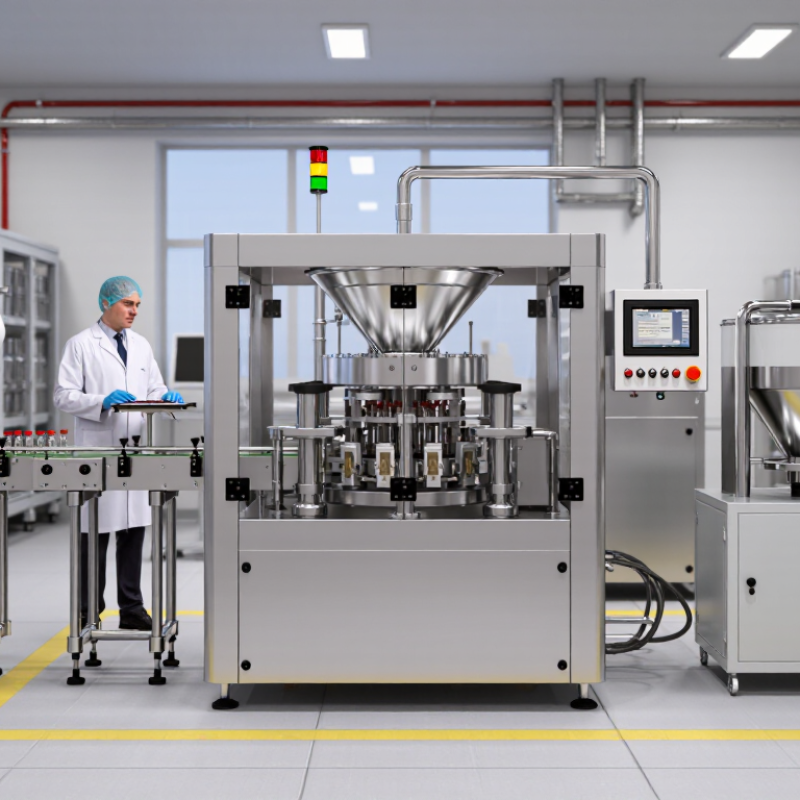
Before comparing pharmaceutical equipment, define the dosage form and its process needs. A tablet line handles blending, compression, and coating; a liquid line may need mixing, filling, and cleaning between products. Note material properties too: powder flow, viscosity, moisture sensitivity, and temperature limits can change equipment performance. For sterile products, include the required containment and environmental controls in the specification. A small detail, like powder bridging in a hopper, can interrupt an otherwise fast line.
Then set batch size and required throughput using saleable output, not the machine’s headline speed. Estimate demand by shift or year, and account for setup, cleaning, changeovers, rejects, and planned maintenance.
FDA’s 2019 report, Drug Shortages: Root Causes and Potential Solutions, found that quality issues contributed to about 62% of shortages it reviewed from 2013 to 2017. That figure is a useful reminder: capacity without dependable quality is not real capacity.
Ask suppliers for performance data using products and operating conditions similar to yours, and test the smallest and largest planned batches. The forecast is rarely perfect. A little uncomfortable, but honest. Oversizing can waste floor space and capital; undersizing can create a bottleneck. Record assumptions, including expected yield, and revisit them when demand or the product mix changes.
Verify GMP Compliance Against 21 CFR 211.63 and EU GMP Annex 15
How to Choose the Right Pharmaceutical Equipment?
Check compliance before comparing capacity or speed. Under 21 CFR 211.63, equipment must be suitably designed, sized, and located for its intended use. It should also support cleaning, maintenance, and reliable operation. Picture the actual room: Can operators reach valves? Does a drain sit beneath a hard-to-clean joint? Small layout details can become recurring problems. EU GMP Annex 15 adds a lifecycle approach to qualification and validation. Define requirements early, then document appropriate design, installation, operational, and performance checks. The depth of testing should reflect risk and intended use. A polished supplier specification is not proof of suitability.
Tips: Ask for the user requirements specification, equipment drawings, material details, and qualification records. Check whether product-contact surfaces are accessible and whether alarms, sensors, and cleaning steps can be tested. Confirm that proposed changes will be assessed and documented. Involve engineering, quality, and operators; each sees different risks. Keep evidence traceable. No checklist catches every awkward detail, and a test plan may need revision when the process changes. That is worth acknowledging.
How to Choose the Right Pharmaceutical Equipment?
Verify GMP compliance against 21 CFR 211.63 and EU GMP Annex 15.
21 CFR 211.63 identifies three equipment considerations: appropriate design, adequate size, and suitable location. EU GMP Annex 15 identifies four main equipment qualification stages: DQ, IQ, OQ, and PQ. These counts summarize listed elements; they are not compliance scores. Confirm applicability and document evidence for the equipment’s intended use.
Sources:
21 CFR 211.63;
EU GMP Annex 15, section 3.
Assess Product-Contact Surfaces: 316L Stainless Steel and Specified Ra
For pharmaceutical equipment, inspect every surface that may touch the product, not just the polished vessel wall. 316L stainless steel is commonly selected for its corrosion resistance and cleanability, but material grade alone does not guarantee suitability. Check fittings, valves, welds, and instrument ports; small crevices can be harder to clean than broad, smooth surfaces. Ask for the specified surface roughness, usually expressed as Ra, and confirm which areas it covers. Ra is only one clue. It does not describe every surface defect or prove that a system is easy to clean.
Tips: Request material certificates and surface-finish records. Confirm how Ra was measured and whether welds were included. Review representative inspection results, not just a general claim of “polished.” Keep the records tied to equipment drawings.
Think about the actual product and cleaning process when reviewing specifications. A lower Ra value may help, but it should not replace inspection of weld quality, drainage, and accessible joints. If the finish requirement is vague, ask the supplier to define the measurement locations and acceptance criteria in writing. I would not treat the lowest number as automatic proof of better performance; that assumption deserves a second look. Make sure the stated finish matches the surfaces your process can inspect and maintain.
Match Cleanroom Needs to ISO Class 8: ≤3,520,000 Particles/m³ at ≥0.5 μm
How to Choose the Right Pharmaceutical Equipment?
Match Cleanroom Needs to ISO Class 8: ≤3,520,000 Particles/m³ at ≥0.5 μm
When a cleanroom is specified as ISO Class 8, equipment must support its particle limit, not just its process output. Under ISO 14644-1, the limit is 3,520,000 airborne particles per cubic metre at sizes of 0.5 μm and larger. This classifies air cleanliness; it does not certify a machine by itself. Check performance during setup, operation, cleaning, and maintenance. Look for accessible surfaces, sealed joints, and materials compatible with the planned cleaning agents. Inspect motors, friction points, exhausts, and transfer areas, where particles or airflow disturbance may occur. Small details matter.
Match the equipment’s footprint and airflow needs to the room layout. A large machine can obstruct supply air or create awkward cleaning zones. Ask for particle-control data, but treat it as a starting point, not a guarantee. Room results depend on installation, operating practices, and other equipment. Confirm the required occupancy state and sampling approach with the cleanroom team. Then assess the installed room under those defined conditions. There is a trade-off: tighter enclosures may reduce particle release, yet make servicing harder. That part is easy to underestimate. Choose equipment that can be cleaned and maintained consistently, and document any assumptions before purchase.
Compare FAT, SAT, and IQ/OQ/PQ Qualification Requirements
Choosing pharmaceutical equipment requires more than comparing capacity and price. FAT checks whether a machine meets agreed specifications before shipment; SAT confirms it works after installation at your site. The FDA’s 2011 Process Validation guidance sets out a three-stage lifecycle: process design, process qualification, and continued process verification. That framework helps teams connect equipment testing with the process it must support. A FAT may verify a control-panel response or confirm that a pump reaches its specified flow rate. A SAT should check the same equipment under site conditions, including utilities and room layout. The tests are related, but they are not interchangeable.
IQ documents that equipment is installed as specified, including its location, components, and utility connections. OQ tests operation across defined ranges, such as temperature alarms or conveyor speed. PQ provides evidence that the equipment performs reliably with the intended materials and operating conditions. EU GMP Annex 15 describes qualification activities including IQ, OQ, and PQ, while allowing a risk-based approach. This matters: a minor sensor change and a new filling line should not receive identical test plans. The detail is easy to underestimate.
Before purchase, request a traceable protocol matrix linking each user requirement to its FAT, SAT, IQ, OQ, or PQ evidence. Define acceptance criteria, responsibilities, and handling of deviations before testing begins. Keep raw records, calibration status, and software versions with the qualification package. A polished FAT report can still miss a site-specific problem. Leave time and budget for retesting; real installations rarely match drawings perfectly.